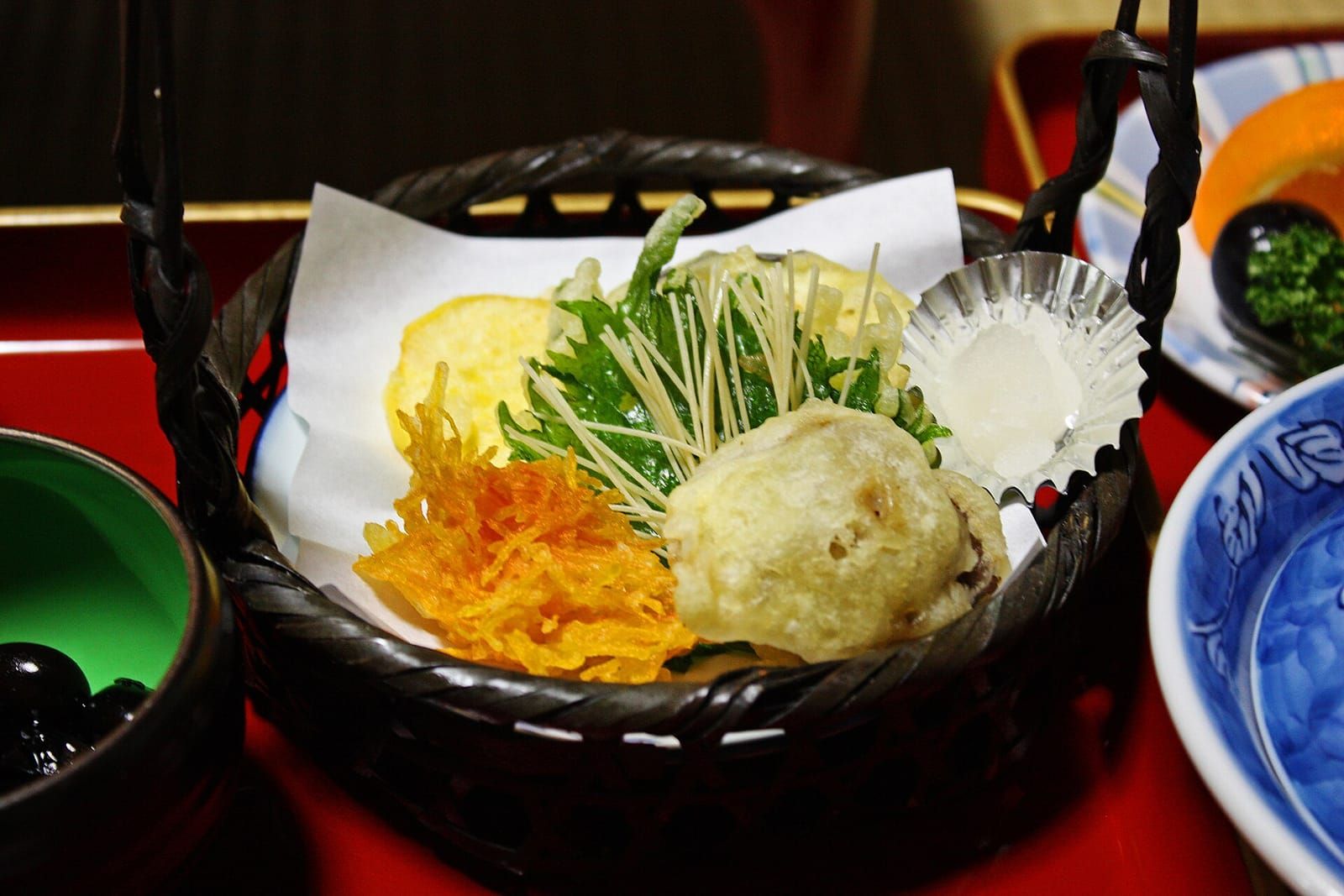
The single most common question about a Koyasan temple stay isn’t about the futons or the prayers — it’s “what will I actually eat?” The answer is shōjin ryōri, the Buddhist devotional cuisine the monks themselves eat, served to every shukubō guest at dinner and breakfast. It’s also — by most guests’ surprised admission — one of the best meals of a Japan trip. Here’s what it is, what’s on the tray, and what the dietary fine print really looks like.
What shōjin ryōri is (and isn’t)
- No meat, no fish. The base rule of Buddhist devotional cooking, per the mountain’s Shukubō Association: the cuisine is fully vegetarian, built on vegetables, tofu, and mountain produce.
- No pungent vegetables either. Koyasan-style shōjin ryōri also excludes the “five pungent” aromatics — garlic, onion, leek, scallion-family vegetables — a point temple kitchens themselves spell out (Rengejō-in’s official description, checked 2026-09-09). The flavor comes from dashi-style broths, sesame, and the vegetables themselves.
- It isn’t punishment food. Multi-dish trays, tempura, seasonal mountain vegetables, and enough variety that “vegetarian monastery dinner” routinely outclasses the ryokan kaiseki people compare it to.
- And yes, beer and sake are allowed — the association notes alcohol is freely available at dinner under the monastic euphemism hannya-tō, “wisdom hot water.”
The two dishes Koyasan is famous for
- Kōya-dōfu — freeze-dried tofu, invented on this mountain and named for it: spongy, broth-soaked, and on practically every tray.
- Goma-dōfu — sesame “tofu” (no soy at all: ground sesame and kuzu starch), the local masterpiece — dense, silky, usually served with a dab of wasabi or miso.
Spot both at dinner and you’re eating the mountain’s thousand-year specialty, not a generic vegetarian menu.

How meals actually work at a shukubō
- Dinner is early — temples serve on the monastery’s schedule, which is why every access guide tells you to arrive by mid-afternoon. Miss the window and there’s no late seating.
- Served in your room or a common dining hall, temple by temple — multi-dish trays, usually more food than you expect.
- Breakfast follows the morning service — attend the 6-something sutra chanting (optional, but it’s the point), then sit down to rice, soup, vegetables and tofu. The sequence — dawn Okunoin, service, breakfast — is the shukubō experience in miniature.
- Booking route changes what’s included. One honest caveat from our date-sampling of Klook’s temple listings (2026-09-09): some plans are room-plus-breakfast only, while temple-direct bookings typically bundle dinner and breakfast. Shōjin dinner is the highlight — check the plan’s inclusions before you book, whichever platform you use.
Allergies and dietary needs: the honest version
Shōjin ryōri is naturally friendly to many diets — no meat, no fish, no garlic/onion — but it is not automatically vegan or allergen-free: broths and seasonings vary by temple kitchen, so strict vegans and anyone with allergies should confirm per temple. The operational reality, straight from the listings (Ekō-in’s Klook page, checked 2026-09-09): contact the temple in advance about dietary restrictions or allergies — these are small monastery kitchens serving fixed courses, and same-day substitutions are genuinely hard. Tell them at booking, not at dinner.
Which temple to eat at
This article is the menu; the temple-stay comparison guide is the reservation — six shukubō compared by meals, morning services and how easily each books in English (two of them with date-based Klook calendars). If you just want the short answer: every shukubō serves shōjin ryōri as standard, so pick the temple by the other criteria and the food takes care of itself. Browse Koyasan temple lodgings on Booking.com to compare dates in one screen. (Accommodation links on Beyond Kansai are monetized via Stay22 — a booking may earn us a small commission at no extra cost to you. Disclosure.)

Quick FAQ
- What is shojin ryori? Buddhist devotional cuisine served at temple lodgings: fully vegetarian (no meat or fish) and, in Koyasan’s tradition, free of pungent vegetables like garlic and onion — built instead around tofu, sesame, and seasonal mountain vegetables.
- Is shojin ryori vegan? Largely, but not guaranteed — kitchens and seasonings vary by temple, so strict vegans should confirm with the specific shukubō when booking.
- Can temples handle allergies? Sometimes, if told in advance — the listings themselves instruct guests to contact the temple ahead about restrictions or allergies. These are fixed-course monastery kitchens: advance notice is the whole game.
- Do all Koyasan temple stays include the meals? Temple-direct bookings typically include dinner and breakfast; some date-based platform plans are breakfast-only (seen on Klook listings we sampled 2026-09-09). Check inclusions before booking — our comparison guide covers which route to use.
- Can I try shojin ryori without staying overnight? The full experience is built into the overnight, and the association also lists daytime shōjin ryōri meals at some temples — ask via the official shukubō reservation channels when planning a day trip.
Editor’s note
This guide describes the cuisine as the mountain’s own institutions document it and makes no personal-experience claims. Checked 2026-07-28 (Shukubō Association official): the vegetarian base, kōya-dōfu and goma-dōfu as local signatures, hannya-tō, and daytime-meal reservations. Checked 2026-09-09: Rengejō-in’s official description of the no-pungent-vegetables rule; Klook temple listings for the breakfast-only plan caveat and the advance-notice instruction for dietary restrictions and allergies (Ekō-in listing). Vegan status is deliberately framed as “confirm per temple” — kitchens differ and we could not verify a mountain-wide guarantee. Drafted with AI assistance and editor-verified.
Sources
- Staying at a Koyasan shukubō — Kōyasan Shukubō Association official (meals, hannya-tō, daytime shōjin ryōri; retrieved 2026-07-28)
- Rengejō-in official (Koyasan shōjin ryōri: no meat, fish, or pungent vegetables; retrieved 2026-09-09)
- Koyasan temple stay guide — Beyond Kansai (six-shukubō comparison, booking routes)
- Okunoin after dark — Beyond Kansai (the evening-to-breakfast sequence)